Plato's Canopy
Design and Build Student Competition | Museum of Outdoor Art | Collaboration with Cady Cordero
Fall 2025
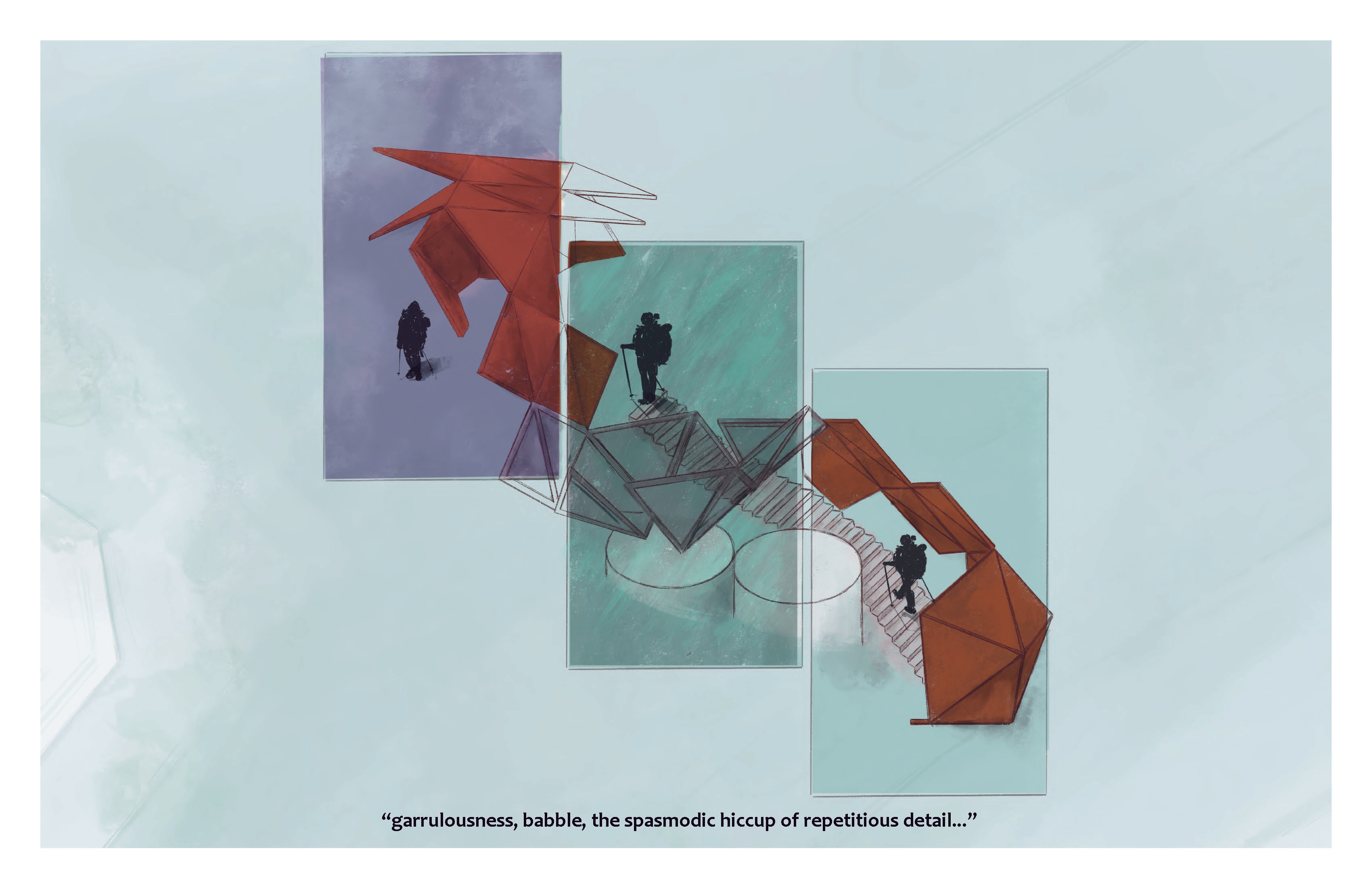
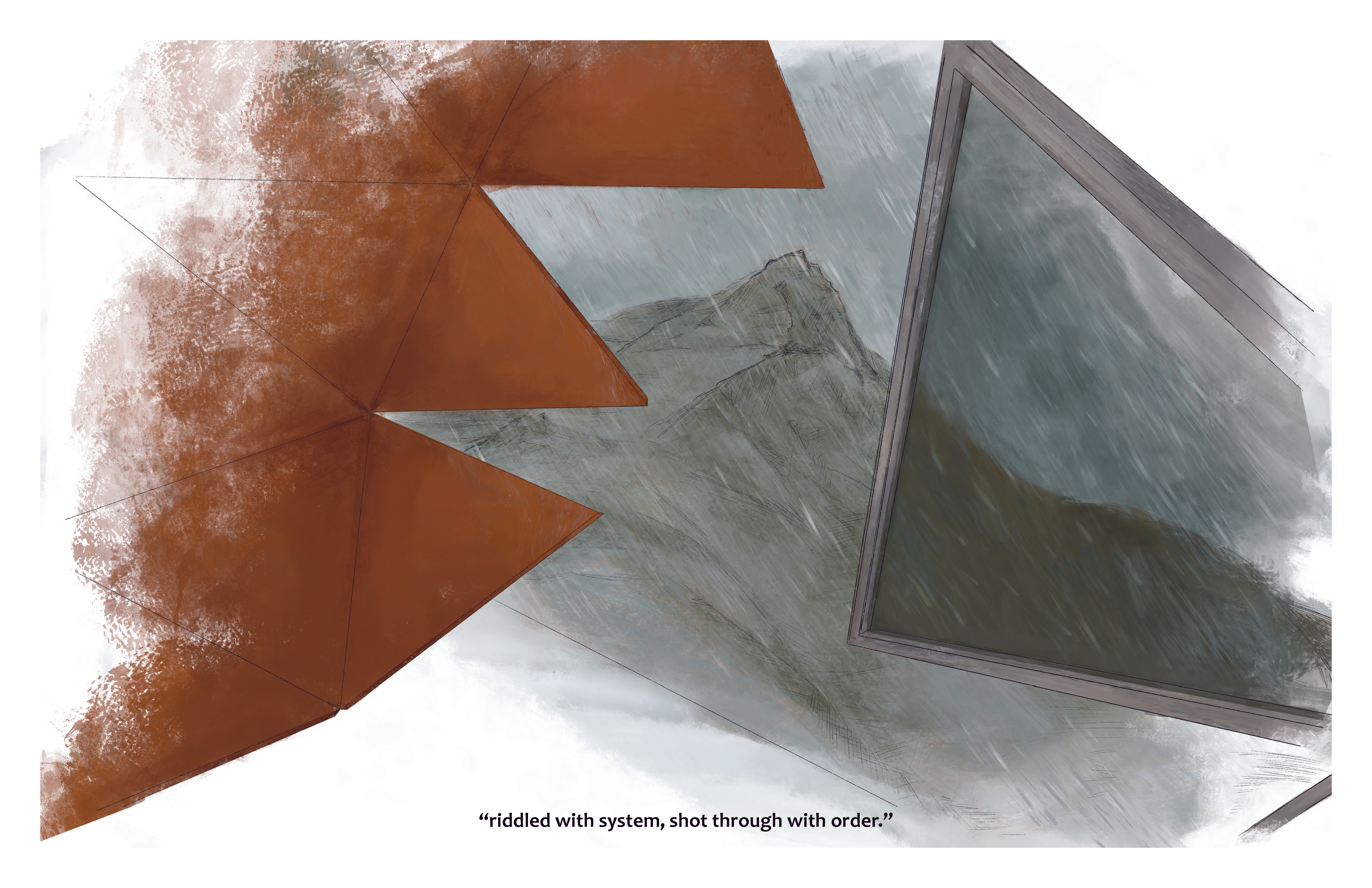
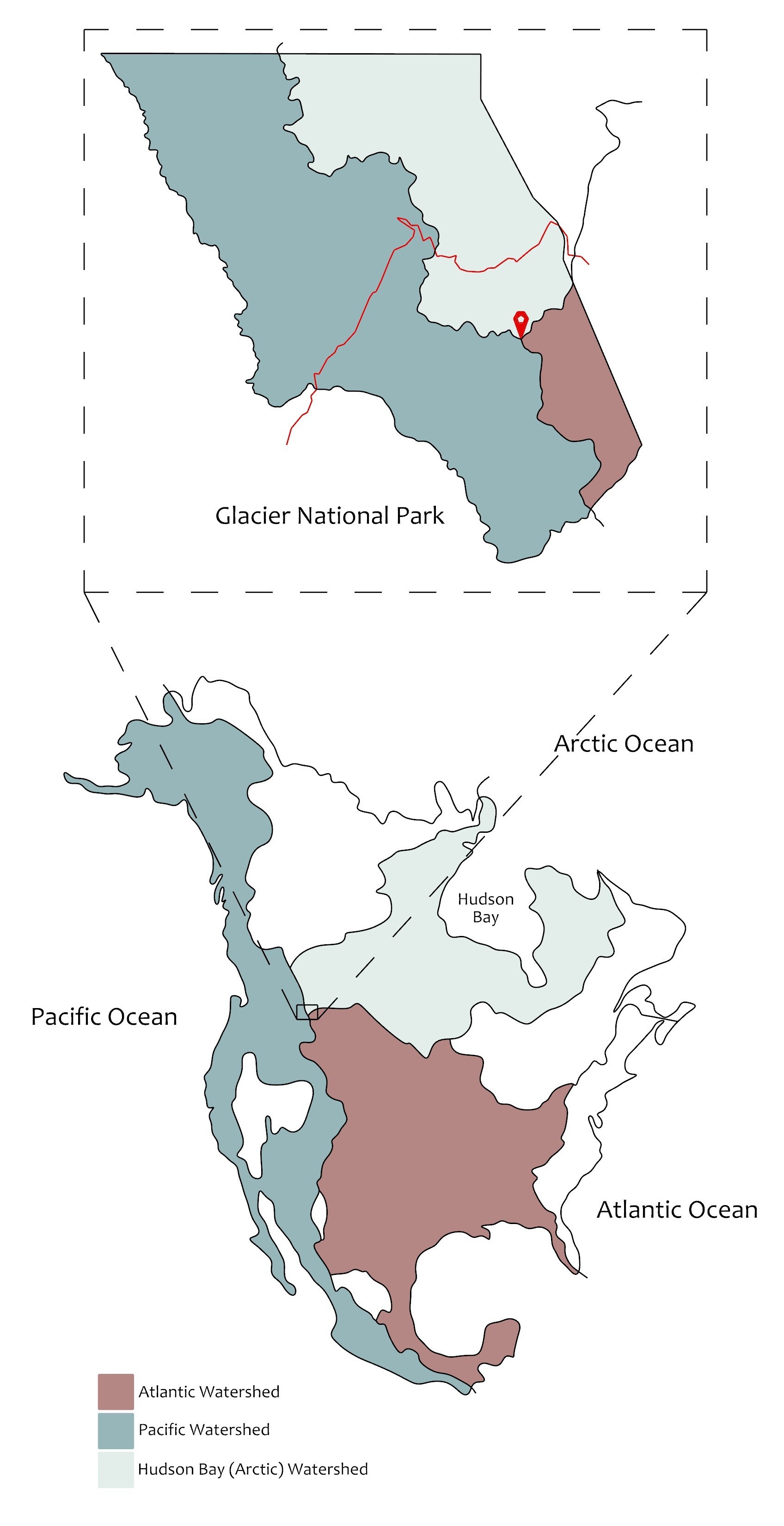
The Design-Build Student Competition challenged students to design and produce an outdoor art installation, as well as create documents that outlined tectonics, budget and practical concerns with fabrication. The theme for 2025 was “Sacred Geometry: Platonic Solids,” having students incorporate Plato’s ideas of sacred geometry into the project. Plato believed the icosahedron was the building block of water, so this project’s form is synthesized from a vocabulary of deconstructed icosahedrons, and programmatically adapted to act as a gateway, shelter and rainwater funnel for hikers. It’s implications are continent-sized, with this project confronting 3 different watersheds that travel across North America — to the Pacific, Atlantic and Arctic Oceans.
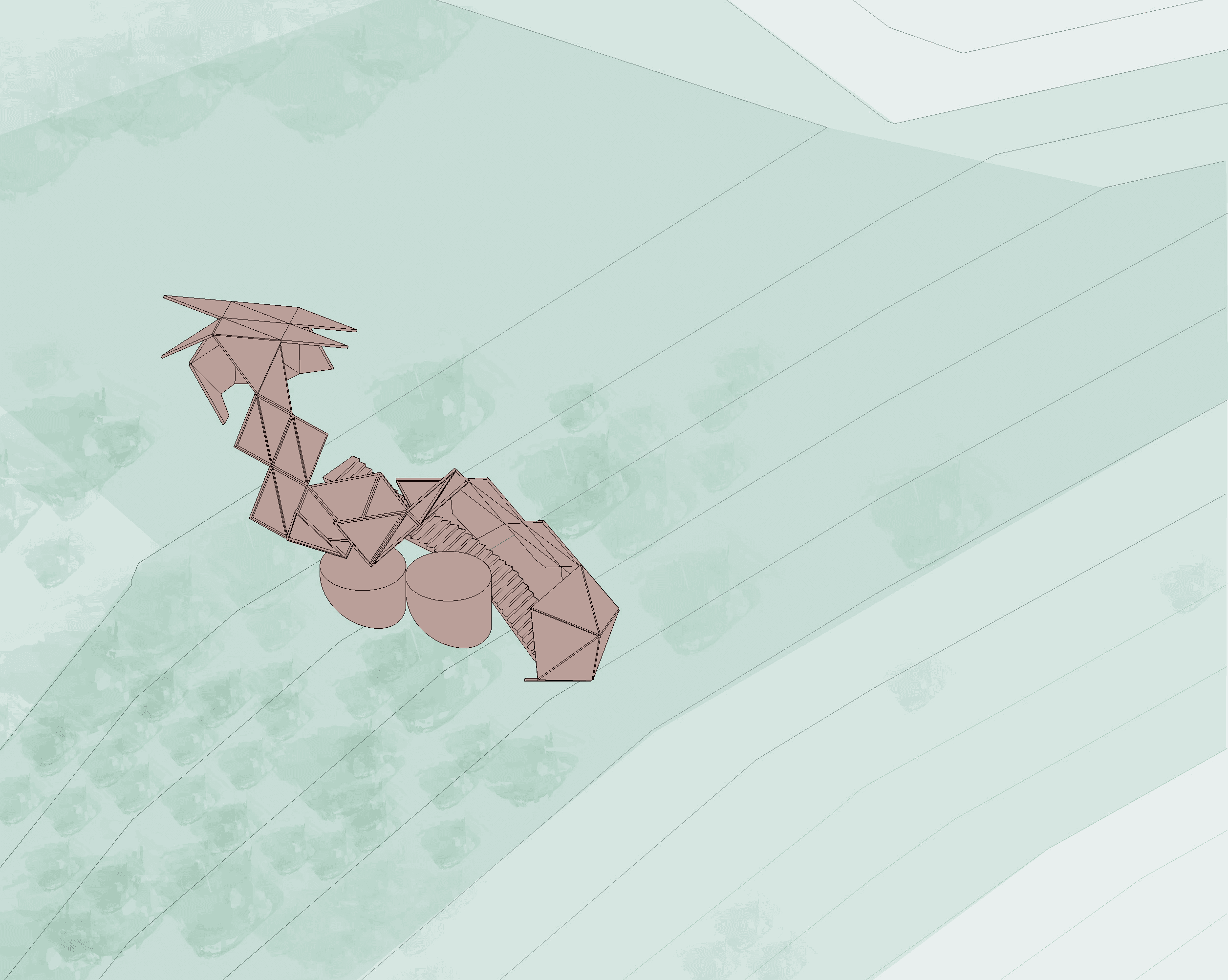
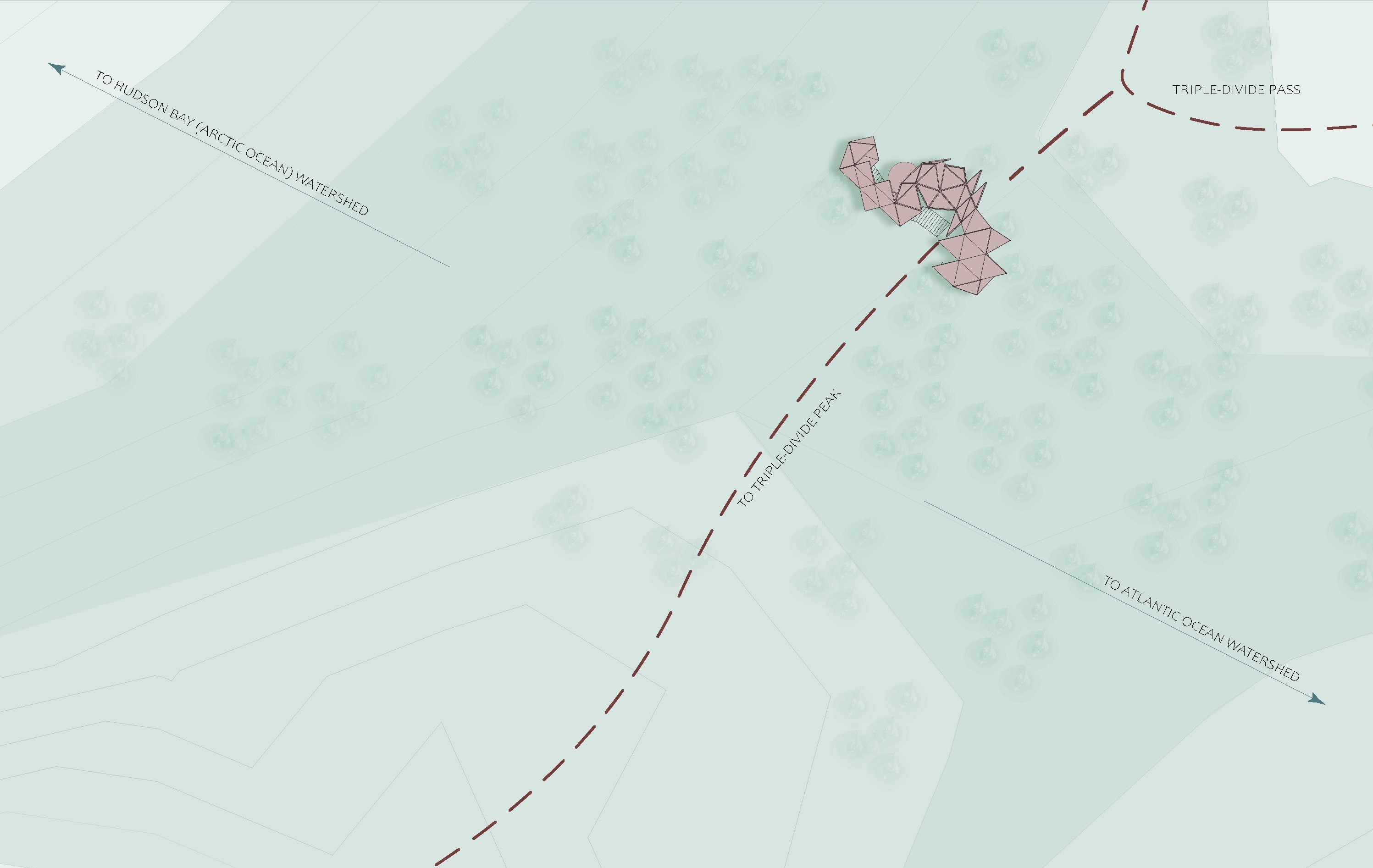
A site between Triple-Divide Peak and Triple-Divide Pass in Glacier National Park was selected because of its narrative potential, logistical feasibility and formal intrigue. Near a popular hiking trail, Triple-Divide Peak is where the Pacific, Atlantic and Hudson Bay watersheds meet. This project straddles the former two watersheds, and acts as a gateway towards the third. This site's unique hydrological condition only exists in three other locations in North America, with only one other sitting in a primarily untouched, natural environment. This rarity makes it a perfect staging ground for our project’s intended confrontation between real-life natural hydrological systems and Plato’s building block of water, the icosahedron.
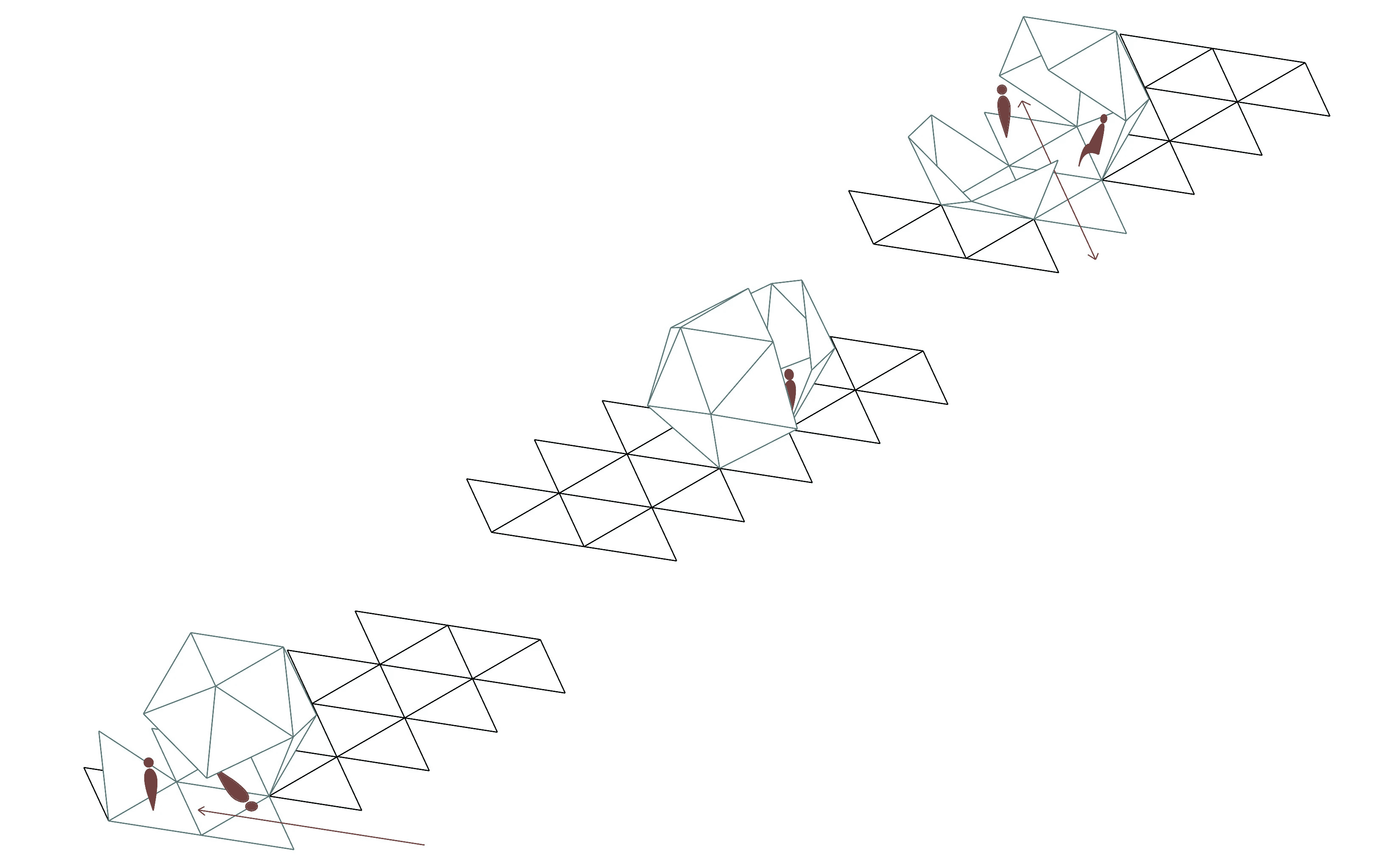
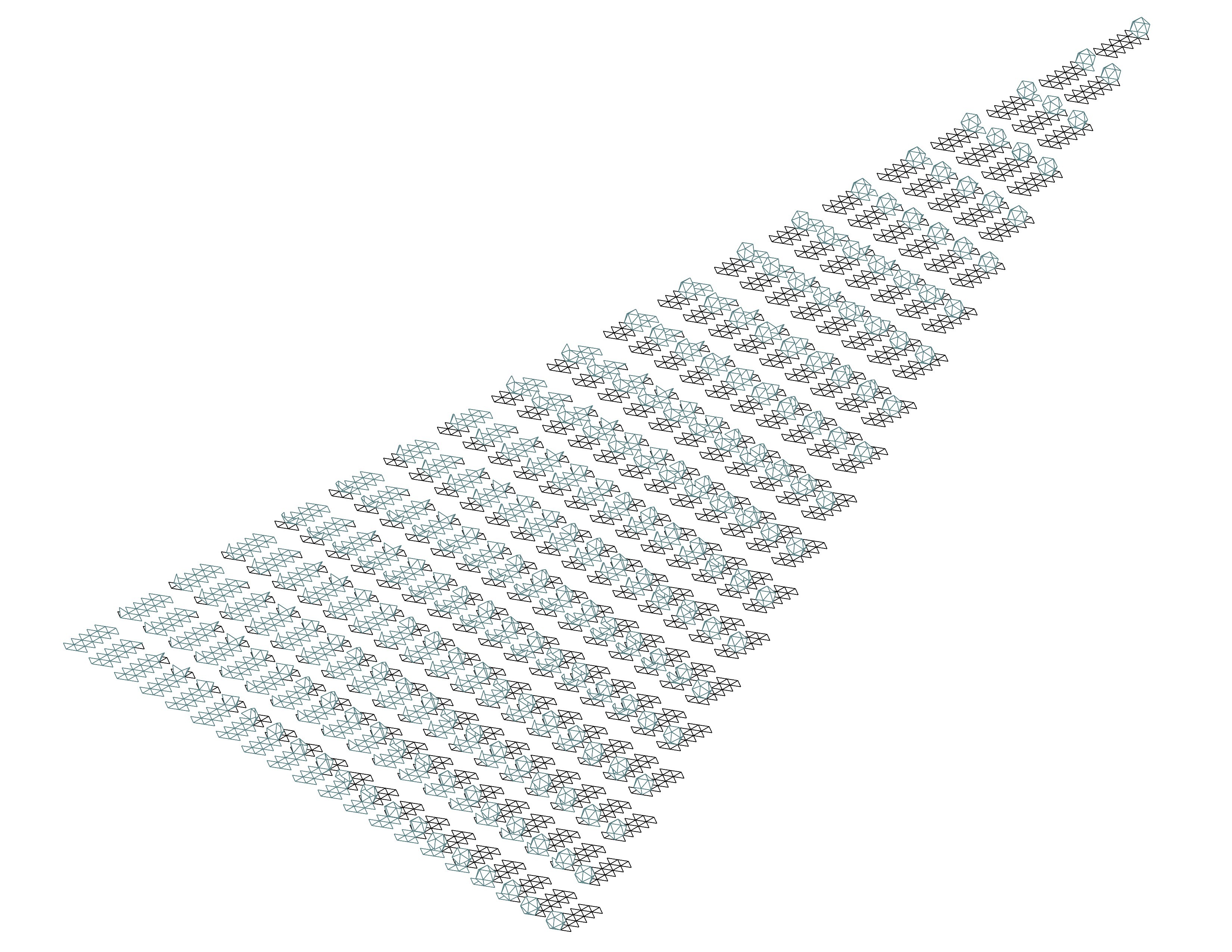
Plato's Icosahedron is unfolded systematically from each end, creating a full vocabulary of the shape's permutations (Below). From this vocabulary, selected permutations are assessed for possible programmatic and circulatory implications (Above). Three permutations were selected and linked together to create the project's main form (Right).
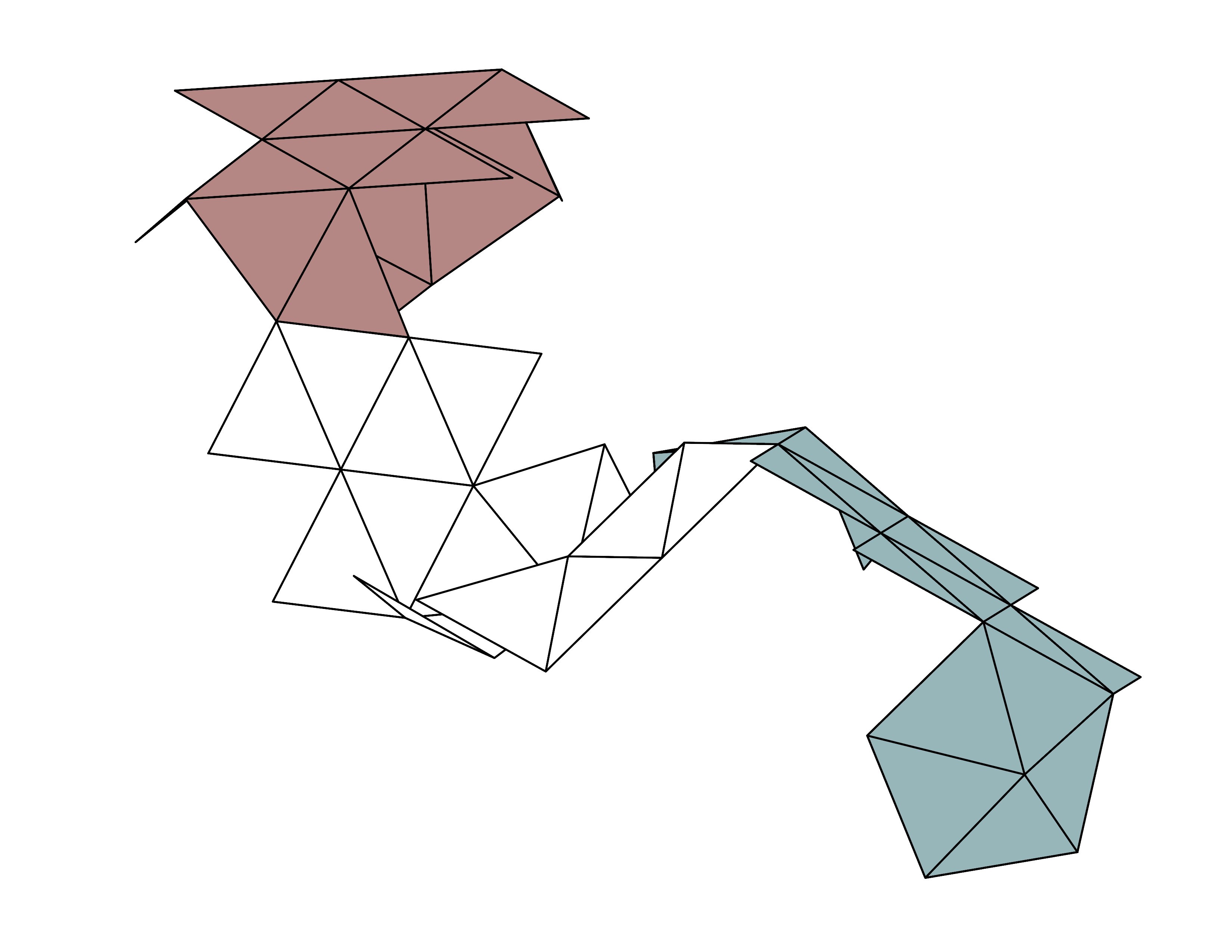
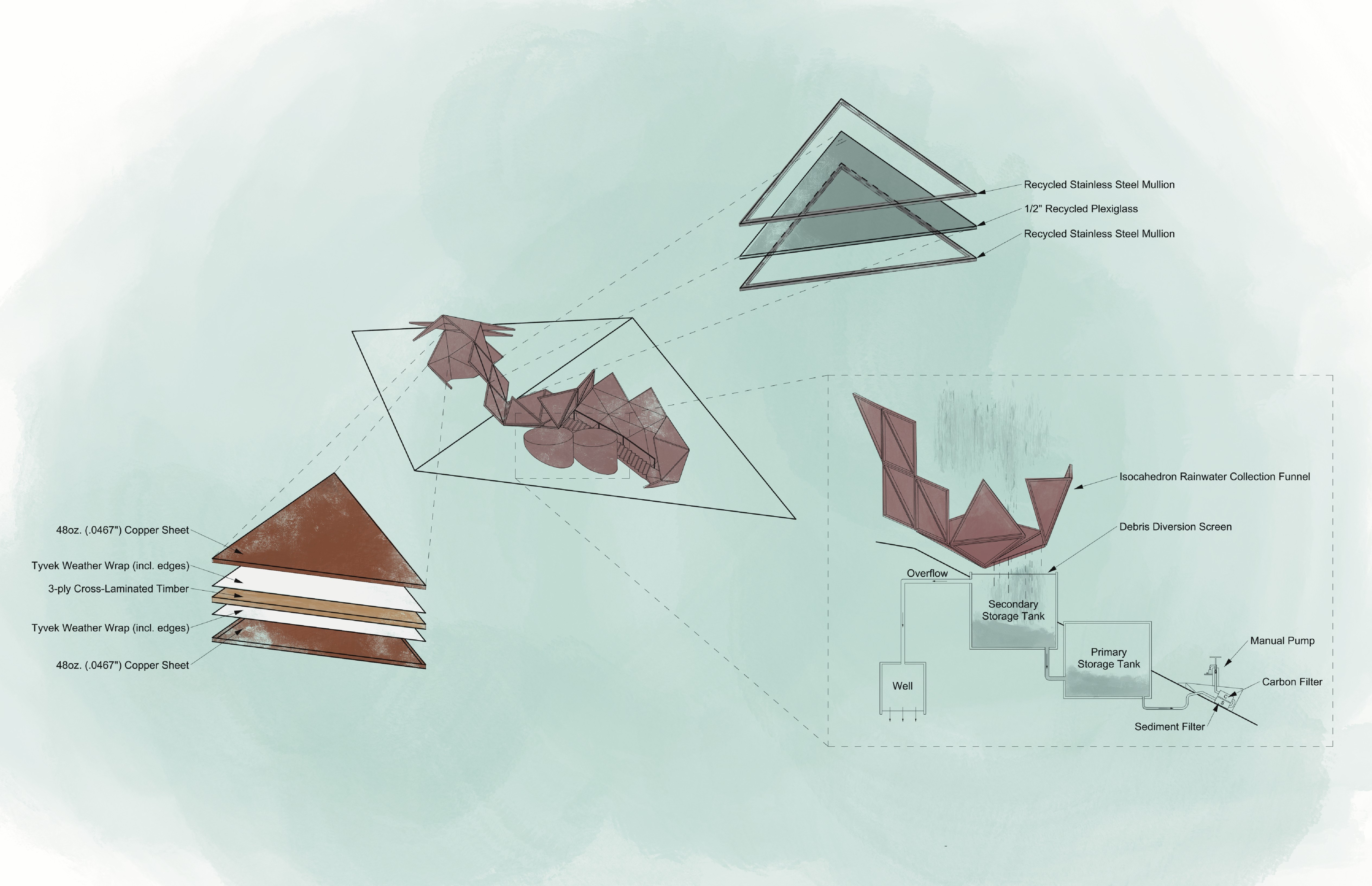
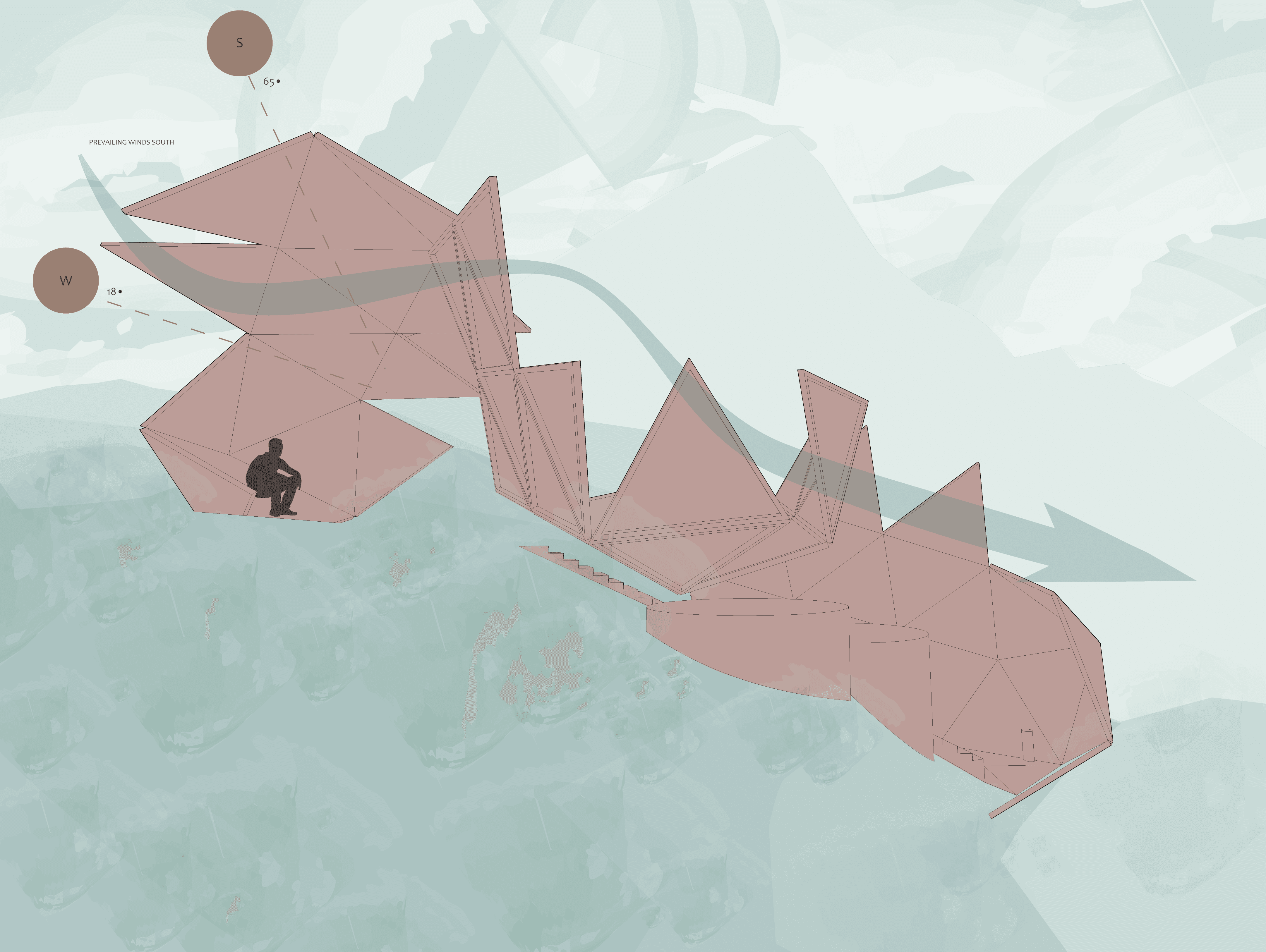
The project acts as a gateway that frames Triple-Divide Peak, a shelter for hikers passing by, and a funnel to sequester rainwater before it travels to the oceans. Echoing Sol LeWitt's "Variations of Incomplete Open Cubes" and taking notes from Rosalind Krauss' comments on his method, this project's form is created from a systematic process of deconstruction, analysis and synthesis. Read the full competition QA, including full design statement, construction timeline & estimated budget, here.